Lobitos Life, Travel in Peru Jenna Fair Lobitos Life, Travel in Peru Jenna Fair

How Home Can Be More Than a Place

After years of traveling through Southeast Asia, Central America, and Europe, co-founder of La Onza Emma Baas shares how she found home in Lobitos, Peru.

We checked in with Emma Baas,
co-founder of La Onza,
to continue our series
where we ask the team:

Why Peru?

Emma Baas

Emma is the co-founder of La Onza and a proud new mama to baby Rosie. As a global traveler who is starting her own family in Peru, we were keen to hear from her about what creates a sense of “home’ in Lobitos.

We asked: What does “home” mean to you now?

EB: For a long time, home was simple to me. It was the small village in the Netherlands where I grew up, my parents’ house. It was loving, safe, familiar. That’s what home is for most kids.

But even while growing up in such a beautiful home, I always felt there was something more out there.

Sacred Valley caputred in her lens

When I was 18, I left home and started traveling through Southeast Asia, Central America, South America, and Europe, and realized people define home in completely different ways. For some, home is the road. For others, it’s the smallest town you could imagine. I once met a woman in a tiny village in Miramar, even quieter than Lobitos, and somehow that was home for her.

For a while, the road felt like home to me too. But deep down, I think I was always searching for a place where my life flowed naturally. That place became Lobitos.

The community, the ocean, the culture, the slower rhythm of life — something here just fit me. Over time, it stopped feeling like somewhere I was visiting and started feeling like somewhere I belonged.

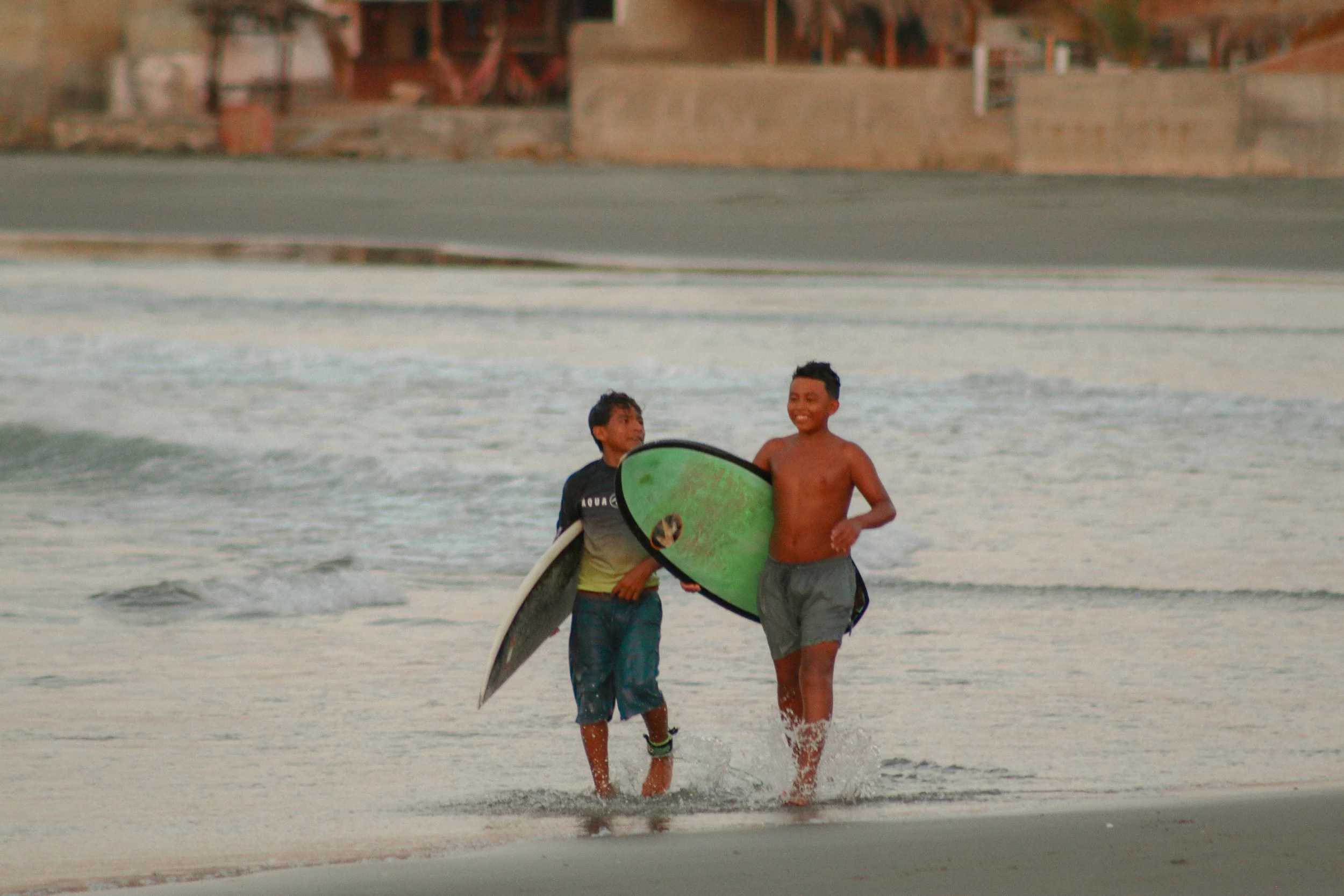
La Onza volunteers at skate class for the kids with local NGO Waves

And now, home has grown even bigger. I found home in my partner, and recently in my daughter too. This past weekend, I celebrated my first Mother’s Day here in Peru, and it hit me in a completely different way. I used to celebrate Mother’s Day with my mom in the Netherlands. Now I’m celebrating it here, with my own family, in the place that has become my home.

I still think home is fluid. Especially when you travel, you realize it can evolve throughout your life. The Netherlands will always be part of my home because my family and lifelong friends are there.

But right now, my home-home is Lobitos.

Emma leading a tour with local leaders

Three weeks left in Early Bird for the August trip to Machu Picchu + Lobitos.

Secure your place before the Early Bird rate ends.

Explore the Journey →

Read More
Jenna Fair Jenna Fair

Why Peru Is Unlike Anywhere Else in South America

Our next group trip is a bit different. We start in the Andes, get lost for a bit in the mountains and then make our way north to Lobitos. But why are we even here to begin with? This week we put the question to our team…

Our next group experience is a bit different, we start in the Andes with a Q’ero Shaman, then tour around the Sacred Valley, visit Machu Picchu and spend an epic night in Cusco. After that we head north to Lobitos for a week of surfing, community and incredible food. You can explore more on that here.

But why are we even in Peru in the first place? 
This week, our team takes a stab at answering— Why Peru?

Harold Koechlin

Our head of surf, born and raised in Peru with 30 years experience leading adventure tours all over South America. We thought he would be a best suited to kick us off.

We asked: What’s something about Peru most people don’t understand until they experience it?

HK: I think most people don’t realize how massive and diverse Peru really is until they start traveling through it.

You can spend time in Lobitos surrounded by desert, great waves, amazing sunsets, and this quiet little coastal community. But we have in contrast and at the same time the Andes, and the Andean culture. Which is drastically, completely different. The geography is itself a factor of change.

Machu Picchu at first light

The size of the Andes, the mountains, how big they are, makes our diversity more drastic. The distance between regions, the isolation— it’s shaped the culture in a really deep way. Food changes. Daily life changes. The way people speak and relate to each other. Every region feels like its own world.

Through stone windows

And then beyond the Andes, you still have the jungle, which feels completely different again.

It's something you have to experience to really realize. Because if you just see a map, you just see a flat surface, you don't really understand how huge it is, how many different climates, landscapes, ecosystems there are. I think that’s what makes traveling through Peru so special. It’s not one experience. The country keeps unfolding the more you move through it.

The Sacred Valley at dusk

Early Bird Registration for the August trip to Machu Picchu + Lobitos is open until May 25, 2026

Secure your place before the Early Bird rate ends.

Explore the Journey →

Majestic Cusco at night

Read More
Surfing Lobitos, Travel in Peru Jenna Fair Surfing Lobitos, Travel in Peru Jenna Fair

The Wave I Didn’t Bail On

What learning to surf in Lobitos, Peru really feels like — from brutal wipeouts to breakthrough moments. A look inside the journey behind our surf and yoga retreats on Peru’s north coast.

Sharing moments like this is why we created retreats. Early bird for June ends April 25, now including a complimentary wellness treatment. Read on or explore more.

I'm next in the line up, the sun is setting, it's beautiful out here, at the edge of the world. The waves are huge in Lobitos right now, for me at least. The surf forecast app Surfline says 6-8ft, which I'm sure is undercutting it. A wave is approaching with a nice long wall. That feeling hits me, this is yours. I paddle but not too much, I’m in position. It builds behind me, and I start to rise-- it's big.

Recently I've been wiping out pretty hard. Not more than usual (I generally wipe yout a lot), just harder. I'm kind of at that point where I can surf bigger swells, but when I mess up, the consequences are more intense. Harder falls, stronger whiplash, the ratio between surfing harder waves and bodily harm is "igual" (or the same, locally).

This wave, that I think I’m claiming is building, about to break, I tell myself "come on— you’re not bailing. You can do it, and you cannot deal with another wipe out."

Determination – or desperation – manifest into aggressive commitment. I commit to my power strokes: 1 -2 - 3, chin down, as the wave breaks I grab the rails as hard as I can and man-handle the board to angle down the face, parallel to the shore.

This is the moment I usually bail. My board is usually perpedicular, I ditch it (a major no-no), cover my head, and go over the falls. Through the washing machine, count to hopefully no more than 3, eventually buoy to the surface.

But this time, I'm not underwater, I am flying on my stomach along the wall. "Pop up!" I think. I push up into a cobra posture, step my feet forward, and I’m up. In this moment, I am the highest I have ever been on planet earth, or so it feels.

This alone is also momentous because I have time to think about my next move. I dig my back heel down, look over my front shoulder, and the board - freaking - turns! I'm in awe. I hear a resounding "yaaah" in front of me, so I start yelling too. Out of the corner of my eye, I pass my coach paddling out to the line up. He saw the whole thing. The stoke is shared, and it’s real.

We started hosting retreats a few times throughout the year to extend experiences like this to our community. The next one is this June and as a special offer we’re adding a Free Wellness Treatment (think: Deep Tissue Massage, Reiki, Equine Therapy) for guests.

Whether just starting out or looking to progress, moments of stoke are what define surfing. These seemingly small moments of unlocking radiate with inspiration that carry on far beyond the session and into day to day life.
Early Bird for June is open until April 25th, 2026, regular pricing kicks in after.
Discover all that’s included here or contact us with any questions.
Read More
Travel in Peru, Retreats Jenna Fair Travel in Peru, Retreats Jenna Fair

Notes from a Year of Retreats

Our next retreat is coming up in June, designed around surfing and yoga, with lots of space to shape the experience on the way

Over our three inaugural retreats, we’ve noticed a pattern.

People are called to us because they work hard, care deeply about their communities, the state of the world, and their own well-being. They spend a lot of time connected to friends and family, but mostly to their screens, their work, their feeds, and causes that demand their attention. They think about their kids/nieces/nephews, climate change, AI, art, expression, and humanity as we know it.

They’re deeply entrenched in a mash-up of extremes, they know there is something more out there for them, yet face the times with pragmatism and realism. Holding space for complexity and duality, hopeful but amidst it all, exhausted. 

Somewhere within this web is where we meet, on a shared, grounded frequency.

Las Capullanas, Lobitos

In Lobitos, we’re in the desert, bordered by an endless horizon. Our cliffs mark the westernmost edge of Latin America. The coast is lined with dry forest in tones of pink, purple, and sage, bare and expansive, with rolling sand dunes, plunging cliff faces, and untouched beaches with perfect waves. It is a kind of paradise, far beyond civilization as we know it, and for us it’s anchored by surfing and yoga.

surfing piscinas in lobitos peru

Piscinas, Lobitos

In this environment, we hold space for our guests to unplug to whatever degree they desire. We take care of the big decisions; making sure the food is incredible, the rooms have a view, and there is a thoughtful yet suggested map to follow. Then we leave room for curiosity to shape the experience in a personal way.

Customized yoga for surfing and creativity, led by Danielle Harbord

Whatever calls our guests here is honored so it can surface and take form on its own terms. Whether that’s time in the ocean, dancing in abandoned warehouses, joining kids from a local NGO for surf lessons, or sunset walks along the beach with wild horses.

When we asked our alumni what stays with them, they tell us:

  • A sense of community, real human connection. 

  • A reminder of how good it feels to help each other, to be part of something. 

  • A kind of nourishment that goes beyond the physical, something deeper, steadier, harder to name.

Immersive cultural experiences shared with Capullanas

You can explore all that’s included in our next retreat from June 20-27th here.

Early Bird is now open through April 25.

If you sign up with a friend, you’ll both receive 10% off, even after Early Bird closes.

Look for us and you’ll find a group standing on the edge of a shift, curious, present, and recognizing the value within themselves. 

Embodying what really matters, what unites us as human beings, and finding balance in a world of extremes.

We’d love to have you with us.

— La Onza

Read More
Travel in Peru Jenna Fair Travel in Peru Jenna Fair

How to Get to Lobitos, Peru

Getting here

Tucked along Peru’s wave-rich northern coastline, Lobitos is one of the country’s most unique surf towns. While it may feel remote at first glance, getting there is surprisingly straightforward. Whether you’re coming for the long left-hand waves, the desert landscapes, or simply a slower pace of travel, here’s how to make your way to Lobitos.

Where Is Lobitos?

Lobitos sits on Peru’s north coast, colloquially known as El Norte, in the Piura region, just over 1,000 kilometers (750 miles) north of Lima, and just south of the Ecuadorian border. Once an oil town during the early 20th century, Lobitos has evolved into a small but vibrant surf community surrounded by desert cliffs and open coastline.

The town is closest to the cities of Talara and Piura, which both have airports with regular connections to Lima.

Flying to Northern Peru

The easiest way to reach Lobitos is to fly from Lima to northern Peru. There are two airport options:

Talara Airport (TYL)

Talara is the closest airport to Lobitos, located about 25–30 minutes away by car. Flights from Lima typically take around 1 hour and 45 minutes.

Because of its proximity, Talara is usually the simplest and fastest way to reach Lobitos.

Piura Airport (PIU)

Piura offers more frequent flight options and is a larger regional hub. From Piura, the drive to Lobitos takes about 2 to 2.5 hours along the coastal desert.

Both routes are straightforward, so your choice often depends on flight availability and timing.

Getting From the Airport to Lobitos

Once you land, the final leg of the journey is by car.

Many travelers arrange a private transfer ahead of time, which is usually the easiest and most comfortable option. Drivers can meet you directly at the airport and take you to Lobitos, allowing you to settle in without worrying about logistics.

For guests joining a La Onza retreat or surf experience, airport transfers from Talara are arranged for you, making the journey to Lobitos smooth and stress-free from the moment you land.

Taxi

Taxis are available from both Talara and Piura airports, though it’s best to confirm the fare in advance and make sure the driver is familiar with the route to Lobitos.

If you prefer to arrange your own transport but would like a reliable option, feel free to contact La Onza and we’re happy to connect you with a trusted local driver.

Travel Time

  • Talara → Lobitos: about 25–30 minutes

  • Piura → Lobitos: about 2–2.5 hours

The drive itself is part of the experience, passing through stretches of desert coastline, small fishing towns, and wide open landscapes.

When to Visit Lobitos

Lobitos can be visited year-round, but conditions vary depending on the season.

The main surf season runs from April through October, when south swells bring larger and more consistent waves to the north coast. During these months, Lobitos often sees long, clean lines wrapping around its point breaks.

From November through March, swells are generally smaller but still fun, with warmer weather and quieter lineups.

Why Lobitos Is Worth the Journey

Part of Lobitos’ appeal is that it still feels off the beaten path. Travelers who make the trip north are rewarded with long surf rides, dramatic desert landscapes, and a tight-knit local community that gives the town its character.

Life moves a little slower here. Days revolve around the tides, the swell, and the rhythm of the ocean. Between surf sessions, visitors often spend their time exploring the coastline, watching the sunset from the cliffs, or sharing meals with friends after a day in the water.

For many people, that combination is exactly what makes Lobitos special.

Read More
Surfing Lobitos, Travel in Peru Jenna Fair Surfing Lobitos, Travel in Peru Jenna Fair

Best Time of Year to Surf Lobitos, Peru

When to come…

Peru’s northern coastline is known for its consistency, and Lobitos, Peru sits at the heart of some of the region’s most celebrated waves. With multiple point breaks and swells arriving from the South Pacific, Lobitos offers surfable conditions throughout the year.

That said, the character of the waves changes depending on the season. Whether you're planning a dedicated surf trip or simply hoping to catch a few memorable sessions while exploring northern Peru, here’s what to expect throughout the year in Lobitos.

Surf Seasons on Peru’s North Coast

Unlike many surf destinations that rely on seasonal storm patterns, Peru’s coastline receives swell from the Southern Hemisphere almost year-round. The long continental shelf and favorable coastline orientation allow Lobitos to pick up consistent waves throughout the year.

However, certain months tend to deliver larger and more frequent swells.

April to October: Prime Surf Season

The most consistent surf season in Lobitos runs from April through October, when stronger south swells travel up the Pacific and wrap cleanly into the region’s point breaks.

During these months, surfers can expect:

  • More frequent swells

  • Longer and more powerful waves

  • Consistent surf conditions across multiple breaks

For experienced surfers, this period often delivers the most memorable sessions of the year. 

Despite the quality of the waves, Lobitos still tends to feel far less crowded than many well-known surf destinations.

November to March: Smaller Swells, Fun Conditions

From November through March, swells tend to be smaller but still very surfable. The ocean often becomes calmer, with warmer weather and lighter winds.

These months can be ideal for:

  • Beginner to intermediate surfers

  • Longboard sessions

  • Travelers looking for relaxed surf conditions

While waves may not reach the same size as peak season, there are still plenty of fun days in the water.

Water Temperature

One of the advantages of surfing in northern Peru is the relatively comfortable water temperature compared to the country’s colder southern breaks.

Water temperatures in Lobitos generally range between 18–22°C (64–72°F) depending on the time of year. Most surfers use a spring suit or light wetsuit, though some days can be warm enough for boardshorts.

The Waves That Make Lobitos Special

Part of what makes Lobitos unique is the variety of waves within a small stretch of coastline.

Several breaks sit within walking or short driving distance of each other, including:

  • Lobitos Point – a long, playful left that works across a range of swell sizes.

  • Baterías – a more powerful wave breaking along dramatic cliffs, often favored by experienced surfers.

  • Piscinas – a beautiful point break that can offer long rides when conditions line up.

Together, these waves give Lobitos a reputation as one of Peru’s most consistent surf destinations.

Surfing Lobitos With Local Knowledge

Like many surf towns, the experience in Lobitos often depends on timing, tides, and understanding the different breaks along the coastline.

For travelers who want to make the most of their time in the water, joining a local surf experience or retreat with La Onza can be one of the best ways to learn the waves, surf safely, and connect with the community that makes Lobitos special.

A Place That Rewards Patience

Part of the magic of Lobitos is that it still feels off the radar. Surfers who make the journey north are often rewarded with long rides, open horizons, and a slower rhythm that revolves around tides, swell charts, and sunsets over the Pacific.

Whether you visit during the peak winter swells or the warmer summer months, the waves — and the atmosphere surrounding them — are what keep many travelers coming back.

If you're planning your trip, our guide on how to get to Lobitos, Peru breaks down the easiest travel routes to the town.

Read More
Lobitos Life, Travel in Peru Jenna Fair Lobitos Life, Travel in Peru Jenna Fair

A Local Guide to Lobitos, Peru

It All Begins Here

Perched along the desert coastline of northern Peru, Lobitos is a small surf town with a big personality. What was once a quiet oil town has gradually evolved into one of the country’s most unique coastal destinations, where long left-hand waves meet dramatic desert landscapes and a laid-back local community.

Surrounded by windswept cliffs, open Pacific horizons, and wide stretches of desert, Lobitos is as visually striking as it is culturally rich. While many travelers arrive for the waves, they often discover that the real magic of the town lies in its people and its slower rhythm of life.

For those willing to venture a little off the beaten path, Lobitos offers a glimpse into a different way of traveling in Peru — one that feels more connected to place, nature, and community. If you're planning a visit, our guide on how to get to Lobitos, Peru breaks down the easiest travel routes to the town.

The Waves

Lobitos is best known for its long, playful left-hand point breaks that peel across the bay. Thanks to consistent swell from the South Pacific and favorable coastline orientation, surfers can often find rideable waves throughout the year.

Several breaks sit within a short distance of each other, giving surfers a range of options depending on swell size and conditions.

Lobitos Point is the most accessible wave and often the first stop for visiting surfers. It offers long rides and relatively forgiving sections, making it enjoyable for a wide range of abilities.

Just down the coast, Baterías delivers a more powerful wave breaking along the base of dramatic desert cliffs. When the swell is strong, it can produce fast, hollow sections that attract experienced surfers.

Nearby, Piscinas is a beautiful point break that can offer long rides when conditions line up.

Together, these waves have helped make Lobitos one of Peru’s most respected surf destinations.

There are of course many, many other spots all along the northern coast, but you’ll have to visit to get more local recommendations to secret spots, not found on Surfline.

The Town

Lobitos itself is small, with a population of just a few thousand residents. The town’s history is closely tied to Peru’s early oil industry, and remnants of that era can still be seen in the wooden houses and rusting structures scattered along the coastline.

Over time, Lobitos has slowly evolved into a surf destination, drawing travelers from around the world who come for the waves and end up staying for the atmosphere.

Despite the growing interest, the town has managed to maintain a relaxed, community-oriented feel that sets it apart from more developed surf towns.

A Community That Protects the Coast

One of the most remarkable aspects of Lobitos is the strength of its local community. Over the years, several grassroots organizations and NGOs have emerged here, working to protect the coastline, support youth through surf programs, and promote environmental stewardship.

These groups play an important role in preserving the natural beauty of Lobitos — organizing beach cleanups, environmental education programs, and surf initiatives that create opportunities for young people growing up in the area. You can learn more about some of these incredible organizations in our Impact section, which highlights the groups that serve as the connective tissue of this unique town.

For visitors, spending time in Lobitos often means encountering these efforts firsthand. The connection between the ocean, the land, and the people who care for it is deeply felt throughout the town.

A Meeting Point of Cultures

Although Lobitos is small, the community that gathers here is surprisingly diverse.

Local fishing families have lived along this stretch of coast for generations, shaping the rhythms of the town long before surfing arrived. In recent years, surfers and travelers from around the world have also found their way here, drawn by the waves and the quiet beauty of the desert coastline.

You’ll often find a mix of people sharing the same lineup or café table — international travelers exploring Peru, surfers from Lima escaping the city for a few days, and local residents who know the ocean better than anyone.

That blend of cultures gives Lobitos its unique atmosphere. Despite the different backgrounds, the town maintains a strong sense of community, where familiar faces appear in the water each morning and evenings often unfold around live music, small performances, and laid-back bar nights.

Beneath the surface, Lobitos also has a surprisingly vibrant underground creative scene, with artists and musicians contributing to everything from a local recording studio to ceramics workshops and multimedia art spaces that bring the community together in unexpected ways.

Where to Eat and Drink

Food in Lobitos is deeply connected to the ocean. Each morning, local fishermen bring in the day’s catch at the pier, and much of it ends up on the tables of the town’s small, family-run restaurants just hours later. Fresh ceviche is a staple here, often prepared with fish caught that same morning, alongside simple grilled seafood dishes served with rice, lime, and a view of the Pacific.

Many of these spots are humble, mom-and-pop kitchens where the menu changes depending on what came in with the boats that day. Eating in Lobitos often means slowing down, sharing a table, and enjoying some of the freshest seafood on Peru’s north coast.

During the day, La Onza Café has become a gathering place for both locals and travelers. Known for its coffee and relaxed atmosphere, it’s often one of the first stops for visitors arriving in town — a place to get your bearings, pick up a map, and hear about some of the hidden gems around Lobitos. The café menu brings together a mix of local ingredients and global comfort food, from waffles and avocado toast to fresh juices and strong coffee before a morning surf.

Evenings in Lobitos tend to be simple and social. Some nights revolve around beach bonfires, while others gather around beers at La Onza’s bar nights, music, and the occasional spontaneous party bringing together surfers, travelers, and locals.

And when major celebrations arrive — especially holidays like Carnival — the town truly comes alive. The streets fill with music, dancing, and color as fishermen, families, and visitors all join in the festivities.

That said, most people come to Lobitos for the surf, which means nights usually wind down early. Dawn patrol calls, and mornings start with the sound of waves and the first surfers paddling out into the bay.

Things to Do Beyond Surfing

Although surfing is the main draw, Lobitos offers plenty to explore beyond the waves.

The surrounding desert coastline invites long walks along the cliffs, especially at sunset when the light turns the landscape warm shades of gold and rust. Quiet coves and empty beaches nearby offer space to swim, relax, or simply watch the Pacific roll in.

For those interested in exploring the region further, nearby Capullanas offers a chance to connect with the history and culture of Peru’s northern coast. Visiting with a knowledgeable local guide brings the archaeological site to life, offering insight into the ancient civilizations that once thrived along this stretch of desert shoreline.

Just outside of town, visitors can also experience equine therapy sessions at a local ranch, where horses are used as a way to reconnect with nature and the slower rhythms of life on the coast.

Another memorable experience is heading out on the water with a local artisanal fisherman. These small fishing trips offer a glimpse into the traditions that have sustained the community for generations — and often end with preparing fresh ceviche right on the boat, using fish caught just moments earlier.

Many visitors find that these experiences reveal another side of Lobitos, where the connection between ocean, land, and community is woven into daily life.

Respecting the Local Community

Like many small surf destinations, Lobitos thrives when travelers approach the town with respect and curiosity.

Supporting local businesses, learning a few words of Spanish, and taking time to understand the culture all go a long way in helping preserve what makes this place special.

Traveling thoughtfully not only enriches your own experience — it also helps ensure that Lobitos remains a welcoming destination for future visitors.

Experiencing Lobitos With Local Knowledge

For travelers looking to go deeper, spending time with people who know the area well can completely change the experience.

Through retreats and surf experiences organized by La Onza, visitors have the opportunity to explore the waves, culture, and community of Lobitos in a more connected way — learning not just where to surf, but how the rhythms of the town shape daily life along Peru’s north coast.

A Place That Stays With You

Many travelers arrive in Lobitos expecting great waves. What they often leave with is something more difficult to describe.

Maybe it’s the desert meeting the sea, the rhythm of the tides, or the sense of community that forms quickly in a small town like this. Whatever the reason, Lobitos has a way of staying with people long after they leave.

And for many, that’s exactly what brings them back.

Planning a Visit to Lobitos

If you’re thinking about visiting Lobitos, spending time with people who know the town well can make all the difference.

Through surf retreats and local experiences at La Onza, visitors have the opportunity to explore the waves, culture, and community of Lobitos in a more connected way, from surf sessions and shared meals to the small moments that make this place unforgettable.

Read More